
Field Telephones
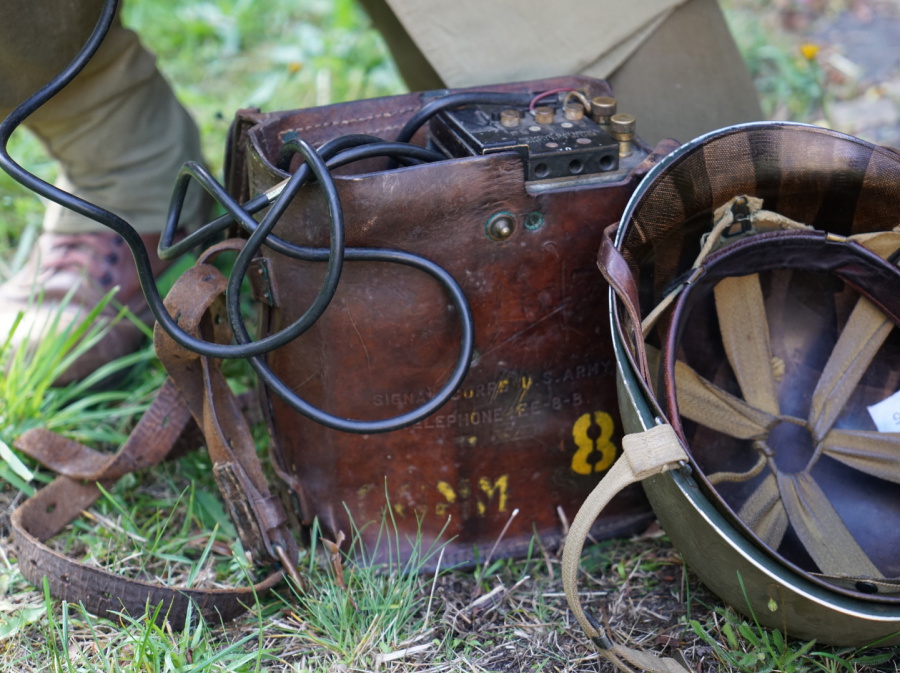
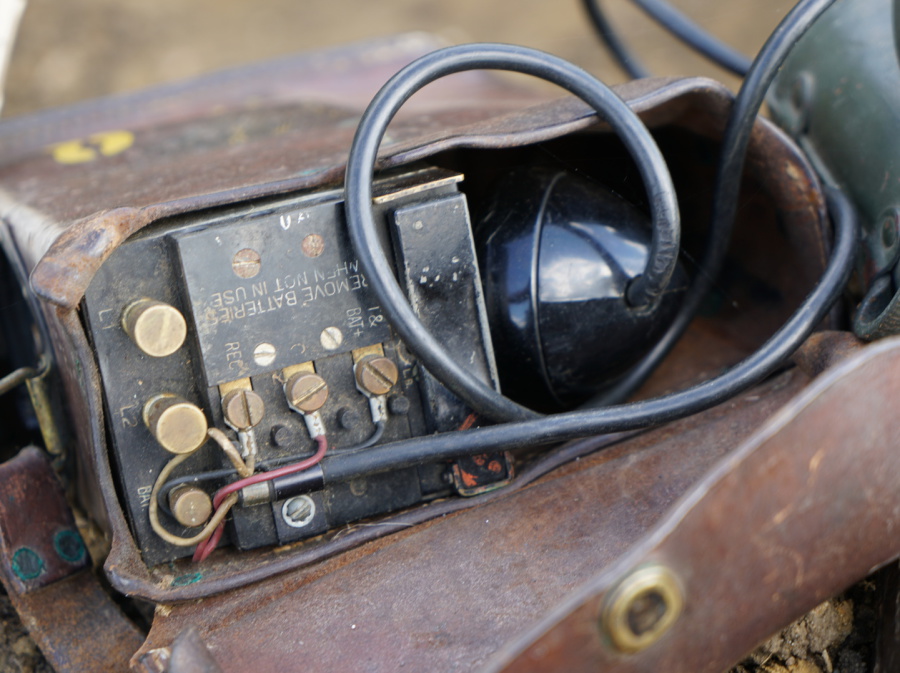
The EE-8 Field Telephone was used by the Signal Corps from before World War II through the Vietnam War. It was housed in leather, then canvas, and its last production had a nylon case and straps, after the changeover to that material in 1967.
The EE-8 Field Telephone was standardized in 1932 and procurement began in 1937, providing a lighter and more functional unit just in time for the huge mobilization of the U.S. military for WW II. Among other improvements, the EE-8 increased the maximum transmission range of the predecessor EE-5 Field Telephone by six miles or more.

Mortar Team Telephone
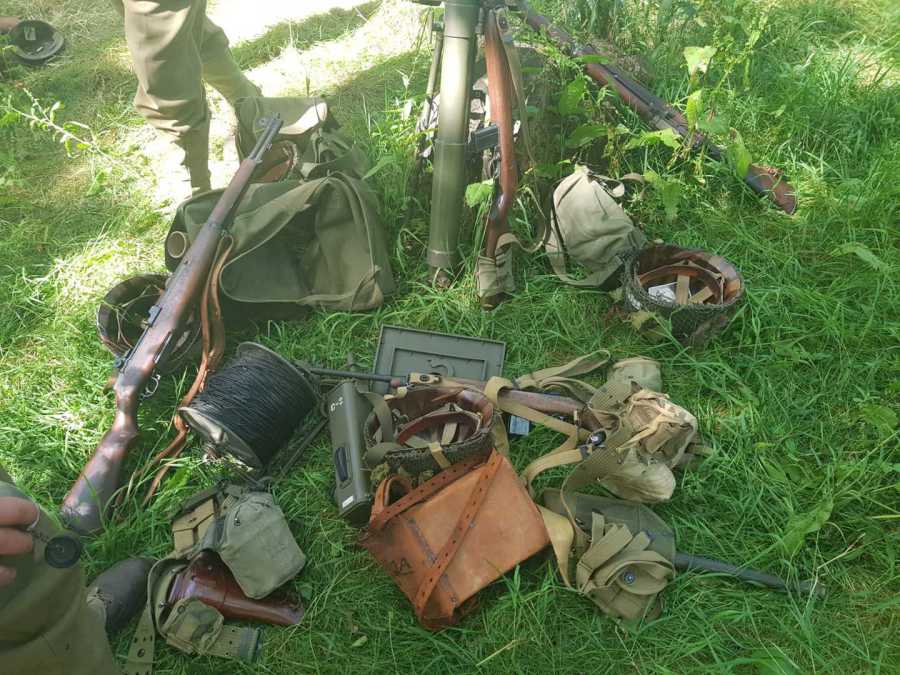
Footage from St.Lo of the 115th show their mortar team leaders carrying the EE-8 Telephone, Wire spoole and a handy talkie!
EE-8
BD-72 Switch Board
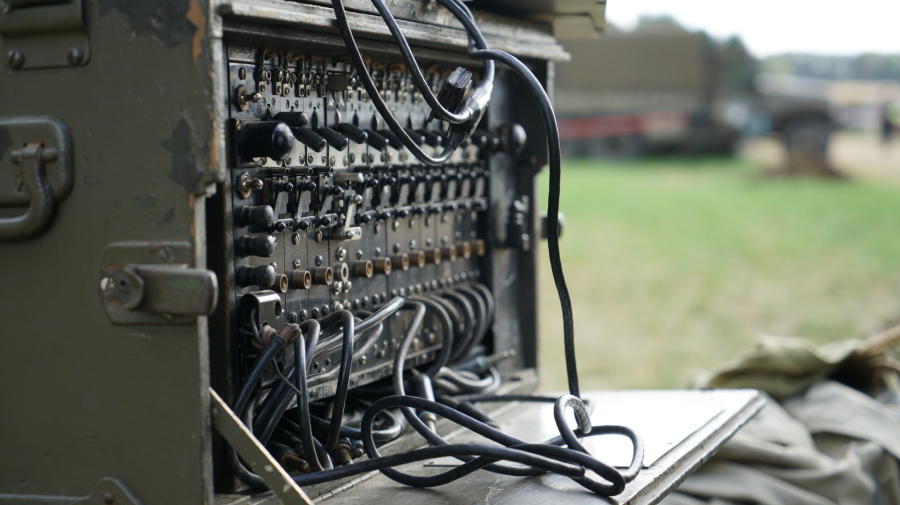
Switchboards may be used in local battery mode or common battery mode. In local battery operation, all EE-8 phones are connected to the switchboard which can connect any pair as necessary. The hand-cranked generator is used to signal the switchboard. Several local battery switchboards can be connected together by trunks; any telephone of any of the switchboards can be connected to any other phone. Use of a switchboard in local battery mode reduces the distance that the signals will carry.
Common battery mode switchboard operation involves common battery signaling and local battery transmission. The local EE-8 must have batteries and the handset switch must be operated when talking. The lever switch of the telephone is used to signal the switchboard operator.
 Print
Print 